
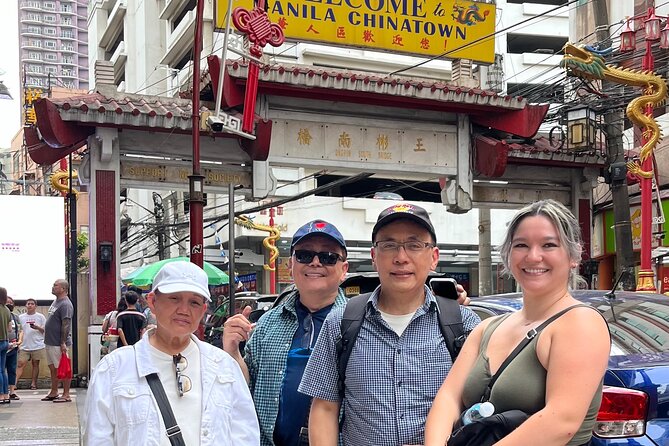
REVIEW · BINONDO CHINATOWN TOURS
Manila Chinatown Food Tour Experience
Manila’s Chinatown feeds you fast. On this Manila Binondo food tour, I love the 7 to 10 snack tastings and I love how guides like Tessie explain what you’re eating and how the neighborhood got its food identity. One drawback to plan for: it is a busy, crowded walking route, so you need patience when you squeeze through the lanes.
This experience runs about 2 hours, starting at 1919 Grand Cafe and ending back there, so it fits neatly into a day that’s already packed. At $65, the value comes from more than just “where to eat,” you get snacks, bottled water, local transport (jeepney or tuk-tuk), and a photo-op.
The best part for me is the people. Guides named Mari and Mara (and others) focus on food plus the culture around it, which makes the tastings feel purposeful instead of random. If you have dietary restrictions, tell the organizer ahead of time or before you start, so the route can work for you.
In This Review
- Key Highlights You’ll Feel Immediately
- Binondo First Impressions: Where the Tour Begins
- Price and What You Actually Get for $65
- Tour Day Flow: A 2-Hour Route That Keeps You Moving
- Oldest Chinatown in the World: Food Stalls With Story Behind Them
- 7 to 10 Snack Stops: How to Eat Smart in a Crowded Food Scene
- The Guide Makes It Click: Tessie, Mari, and Mara at Work
- Jeepney or Tuk-Tuk Transport: Practical Manila Style
- Souvenirs and the Gold Stalls: Beyond the Plate
- Weather and Crowds: The Real-World Considerations
- Who Should Book This Manila Chinatown Food Tour
- Practical Tips to Get the Most From Your Tastings
- Should You Book the Manila Chinatown Food Tour?
Key Highlights You’ll Feel Immediately
- 7 to 10 snacks instead of one big meal, so you can taste more of Binondo in less time
- Local guide-led street navigation in an area where it’s easy to get overwhelmed
- Photo-op included, so you’re not juggling food and your camera the whole time
- Jeepney or tuk-tuk transport, which helps you cover ground without turning it into a marathon
- Souvenir shopping plus gold-stall walking, so the tour feels like more than just eating
Binondo First Impressions: Where the Tour Begins
Binondo, Manila’s Chinatown, is one of those places that hits your senses before your stomach even fully understands what’s happening. Narrow streets. Busy stalls. Lots of people doing lots of things. Even if you like exploring on your own, this area can feel like sensory overload fast.
That is exactly why I like starting with a guided plan. You meet at 1919 Grand Cafe on Juan Luna Street, and from there the tour gets you moving through the neighborhood with a purpose. The goal is simple: you’re not just passing through Binondo, you’re learning how to read the food scene, then eating your way through it.
One practical plus: since the whole tour loops back to the meeting point, you don’t have to worry about transportation back to where you started. You get the freedom of a short walkable outing, without the stress of trying to figure out the route at street level.
More Binondo Chinatown walks:
- Manila: Intramuros, Chinatown, and Old Manila Half-Day Tour
★ 5.0 · 37 reviews - Intramuros & Chinatown Manila Tour – Walking, Food & Culture
★ 4.5 · 32 reviews - Manila: Binondo Walking Tour ( Oldest Chinatown )
★ 5.0 · 30 reviews
Price and What You Actually Get for $65
$65 per person sounds like a lot until you break it down. Here’s what’s included, which changes the math in a good way:
- Snacks: 7 to 10 different items
- Bottled water
- Local guide
- Local transportation (jeepney or tuk-tuk)
- Photo-op
- Admission ticket included
So you’re paying for guidance, access, and a structured food plan, not just walking around while figuring out what to order. In Chinatown, that planning matters. Menus can be hard to decode, and stall-to-stall variety is huge. A guide helps you avoid the classic problem, picking something that looks good but is the wrong portion size or not the dish you actually came for.
Also, the group size cap is 15 travelers, which is small enough that you’re less likely to feel like a numbered stop on a factory line. And there are group discounts plus a mobile ticket, which makes it easier to manage day-of logistics.
Tour Day Flow: A 2-Hour Route That Keeps You Moving
This is a 2-hour tour, and it’s designed to feel like a sprint, not a long sit-down meal. The rhythm is typically:
- You start at the meeting point in Binondo.
- You walk and stop for tastings, with the guide directing what you try.
- You move through food-focused lanes, then shift into other neighborhood stops like souvenirs and gold-stall areas.
- You finish back at the original meeting point.
The key is pacing. You’ll be sampling multiple items, so the guide’s choices matter. You’re not just getting random street food, you’re getting a mix that helps you understand the neighborhood’s Chinese cuisine roots and how Manila’s food culture shows up around it.
Because the tour is short, wear shoes that can handle uneven sidewalks and lots of steps. Your “extra time” will get spent in line for a stall sometimes, not on sightseeing delays.
Oldest Chinatown in the World: Food Stalls With Story Behind Them
One of the first concepts the tour leans into is that Binondo is known as the oldest Chinatown in the world. That framing isn’t just trivia. It changes how you interpret what you’re seeing.
When you walk past stalls selling savory Chinese cuisine and street-style food, you can connect the dots: these dishes weren’t invented for tourists. They are part of ongoing local routines. The guide helps you understand how the culture and cuisine shape each other in day-to-day life.
This matters because it helps you slow down just enough to notice details you might otherwise skip, like the difference between quick snack foods and dishes people treat as part of a larger meal. Even if you already love street food, I think the cultural context turns the tasting into something more memorable than just eating your way to a full stomach.
The tour setting is old-school Chinatown energy, not museum calm. Expect a working neighborhood, with all the noise and movement that comes with it.
More Food Tours in Luzon:
- Makati Street Food Experience end with a Rooftop Bar
★ 5.0 · 33 reviews - Manila Food Tour Experience with Local Guide
★ 5.0 · 4 reviews - Boracay Sunset Cruise with Party DJ & Unlimited Food and Drinks
★ 5.0 · 211 reviews - Manila Food Tour: Explore World’s Oldest Chinatown
★ 5.0 · 158 reviews
7 to 10 Snack Stops: How to Eat Smart in a Crowded Food Scene
Here’s what I really like about the tasting approach: you try 7 to 10 different dishes instead of one “main attraction” meal. That means you get a broader sense of the flavors people actually buy and share.
In practice, you can use the tour as a cheat code for decision-making. Chinatown can look like a buffet of options, but you only have a limited time window. The guide reduces the choices to smart picks, so you spend your energy eating instead of guessing.
A few tips if you want the best results:
- Come hungry, but not starving. If you wait until you’re too empty, you may end up going too fast.
- Take small bites when something is greasy or rich. You’ll appreciate more variety.
- Sip water between tastings. It helps reset your palate and keeps you comfortable for the rest of the route.
- If you have dietary restrictions, flag it early. The tour specifically asks you to let them know before you start so they can adjust.
The tour is also not limited to purely Chinese dishes. You’ll get a mix of Chinese and Filipino-Chinese fusion flavors, which is one of the reasons Binondo food is so interesting. It doesn’t feel like a single-note experience.
The Guide Makes It Click: Tessie, Mari, and Mara at Work
The food matters, but the guide is what turns the food into a story you can tell later. Guides like Tessie, Mari, and Mara are mentioned for being strong on both the area and the food itself.
That combination is important. A guide can point at a menu and say “try this,” but a great guide helps you understand why it’s worth trying. You learn what to look for, and you learn how the neighborhood food culture works.
In places like Binondo, that context helps you avoid the feeling of being swept away by the crowd. Instead of just following a person from stall to stall, you start noticing patterns, like what gets ordered more often, what looks like a popular snack format, and how the food choices fit the pace of the neighborhood.
The reviews also highlight a simple theme: guides are kind, smart, and focused on making sure your belly and your understanding both get satisfied. That’s the kind of tour design you want, especially when you’re traveling with limited time.
Jeepney or Tuk-Tuk Transport: Practical Manila Style
The tour includes local transportation, either a jeepney or tuk-tuk. Even if you love walking, I like this because it keeps the 2-hour window realistic.
In Manila, distances can feel longer than they should, and sidewalks can be complicated in busy zones. Using local transport helps the tour cover more ground without stretching into a half-day commitment.
It also helps you experience the city in a more local way. Jeepneys and tuk-tuks are part of daily motion here. Even if you’ve seen them before, seeing them used as transport inside an actual food route gives it a useful purpose.
You still do plenty of walking, though. Think of transport as “the breaks in the walking,” not as a full ride from stop to stop.
Souvenirs and the Gold Stalls: Beyond the Plate
Most Chinatown food tours focus only on eating. This one adds a shift toward shopping and walking through other neighborhood interests.
You’ll head into areas where you can buy Chinese souvenirs, then you’ll walk toward the gold stalls. That matters because Binondo isn’t only a food district. It’s also a trade and shopping district. If you like collecting a small memento instead of only buying snacks, this adds a layer.
Also, seeing the gold-stall area is a nice contrast after food. Your senses change. Your eyes get busy. Your brain stops craving only the next bite and starts watching the neighborhood rhythm again.
If you’re hoping for a tour that feels like a whole slice of life in Chinatown, this extra walk makes the experience feel less like a checklist.
Weather and Crowds: The Real-World Considerations
This is a street-food tour in a lively neighborhood, so weather and crowds matter.
The experience requires good weather. If the day is rainy, the tour may be canceled, and you’ll be offered a different date or a refund. On a clear day, you’ll be happier because you can keep moving, and you don’t have to worry about slipping or rushing stall to stall.
Crowds are part of the deal in Binondo. That means:
- You’ll likely have moments where you wait your turn at a busy stall.
- You’ll want to stay close to the group.
- You should assume your route will be paced by what’s happening around you.
If that sounds stressful, choose a calmer time of day to start and keep your expectations realistic. Think of it like eating in a working neighborhood, not visiting a theme park.
Who Should Book This Manila Chinatown Food Tour
I’d book this tour if you:
- Want a short, high-output food experience in a neighborhood you’d have trouble navigating alone
- Like variety, since you’ll try 7 to 10 dishes rather than only one signature meal
- Enjoy learning how the food scene connects to the neighborhood culture
- Prefer a small group (up to 15) with a guide who stays engaged
This is also a good fit if you’re traveling with family members who need structure. Even if the adults love wandering, the guide’s job is to keep you from getting scattered in a place with too many choices.
If you prefer super slow travel with long sitting meals, this tour may feel like you’re always “on to the next stop.” It’s designed for speed and sampling.
Practical Tips to Get the Most From Your Tastings
A few things will make this tour smoother:
- Come hungry, but not frantic. The guide is feeding you multiple items in a short time.
- Wear comfortable shoes. You’ll be walking through busy lanes and stall areas.
- Plan for water breaks. Bottled water is included, use it to pace yourself.
- Tell them about dietary restrictions before you start. The organizer explicitly asks you to let them know ahead of time.
- Be ready to shop with purpose. Souvenir stops and gold-stall walking are included, so decide in advance if you want to buy something or just look.
- Bring your phone for photos. The tour includes a photo-op, but you might want extra pics too.
If you do these, you’ll finish feeling full and informed, not full and confused.
Should You Book the Manila Chinatown Food Tour?
Yes, if your goal is a structured, high-value taste of Binondo without the stress of figuring out what to order and where to go. The $65 price makes more sense once you see what you’re getting: multiple snacks, water, a guide, and local transport all within 2 hours.
Book it especially if crowds and menus overwhelm you. The guide support makes a real difference in how enjoyable the day feels.
Skip it if you want a long meal experience or if you hate busy walking routes. This tour is about movement, sampling, and local street energy.
If you’re the type who wants to leave Manila with both a satisfied stomach and better instincts for street food, this is a strong bet.
Freshly added in Luzon
- Skip the Line: Villa Escudero Plantation & Resort Day Pass Ticket★ 4.5 · 11 reviews
- Intramuros Walking Tour: Explore the Manila’s Walled City|Private★ 5.0 · 9 reviews
- Villa Escudero Tour with Lunch From Manila (SHARED)★ 5.0 · 5 reviews
- The Jeepney & Tuk Tuk Adventure ride with Local Guide★ 4.5 · 4 reviews
- Private Filipino Cooking Class in the Heart of Manila,Makati City★ 5.0 · 5 reviews
- Villa Escudero Coconut Plantation Day Trip from Manila★ 3.5 · 9 reviews
- Angeles City / Clark Airport to La Union (Bauang, San Fernando, San Juan)★ 3.5 · 4 reviews
- Manila ATV Mountain Trail Adventure(with Transfers***)★ 4.5 · 19 reviews
Binondo Chinatown Tours, compared.
Manila: Intramuros, Chinatown, and Old Manila Half-Day Tour
Read our review →
Manila Food Tour: Explore World’s Oldest Chinatown
Read our review →
Manila: Guided Food Tour of Binondo with Tastings
Read our review →Manila: Intramuros, Chinatown, and Old Manila Half-Day Tour
Read our review →
Intramuros & Chinatown Manila Tour – Walking, Food & Culture
Read our review →
Manila: Binondo Walking Tour ( Oldest Chinatown )
Read our review →

Browse the lists this tour appears in