
REVIEW · HISTORICAL TOURS
Full-Day Historical Heritage Guided Tour of Tacloban and Palo
Tacloban history hits hard, in the best way. This full-day tour links World War II landmarks with ST Haiyan stories, then adds the everyday culture of the Waraynons. I like how the day is guided with context, and how a friendly guide such as kuya Jeff helps you make sense of what you are seeing.
Two things I also love: the tour’s focus on real places tied to big events, and the way the guide adds extra background for both WWII and the 2013 typhoon, not just dates on plaques. One thing to consider is the pacing, about 6 to 7 hours total with frequent short stops, so it is not a “linger forever” kind of day.
In This Review
- Key highlights to know before you go
- Tacloban and Palo: where WWII and ST Haiyan stories connect
- A guide like kuya Jeff keeps the day understandable
- Sto. Nino Shrine and Heritage Museum, plus Marcos-era art context
- Leyte Landing Memorial: the MacArthur landing that changed the timeline
- Palo Cathedral in the heart of Palo, a WWII hospital site
- M/V Eva Jocelyn Shrine: Haiyan’s force made visible
- Tacloban City Hall and Cancabato Bay views for a “present day” feel
- Leyte Provincial Capitol: a government building with multiple eras
- San Juanico Bridge: an iconic 2.16-kilometer link between Leyte and Samar
- Madonna of Japan: peace symbolism with a WWII afterstory
- Sto. Nino Church in Tacloban: typhoons, earthquakes, and shelter
- Price and value: what $51 buys in a full-day guided format
- Logistics and pacing: plan for a packed day, not a slow wander
- Who should book this tour, and who might prefer something else
- Should you book the Full-Day Historical Heritage Guided Tour of Tacloban and Palo?
- FAQ
- What time does the tour start?
- How long is the tour?
- How much does the tour cost?
- Is pickup offered?
- What’s included in the price?
- Are any entrance fees included or free?
- Is this tour private?
- What if the weather is poor?
- Are service animals allowed?
Key highlights to know before you go
- World War II stops in Palo and Tacloban that show how the war shaped buildings and daily life
- ST Haiyan, also known as Yolanda, told through specific landmarks like the M/V Eva Jocelyn Shrine
- Church and memorial sites that connect faith, survival, and remembrance
- Scenic photo points including views from Tacloban City Hall
- San Juanico Bridge and Madonna of Japan for a broader, peace-focused story
- A friendly, story-forward guide experience with extra background on WWII and the typhoon
Tacloban and Palo: where WWII and ST Haiyan stories connect
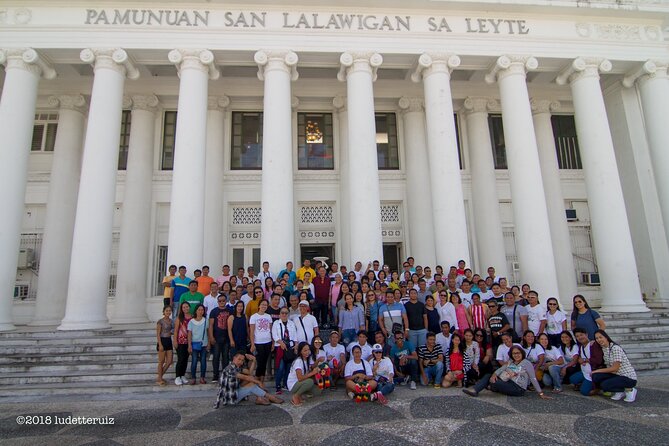
If you want your Leyte trip to feel more human than historical-textbook, this is a smart way to do it. The day is built around places in and around Tacloban and Palo that carry meaning long after the headlines fade. You start with church and museum stops, then move into memorials tied to the liberation campaign, and later you hit Haiyan landmarks that bring the scale of the disaster into clear focus.
What makes the format work is the balance. You are not only looking at war and disaster. You are also hearing how people rebuilt afterward. That recovery angle matters, because it turns the day from “tragic past” into “surviving and continuing,” which is exactly what the Waraynons story is about.
The schedule is tight, but it is designed for variety. Expect quick hits at multiple sites, with one longer museum stop. If you are the type who likes to absorb slowly, pack patience, or plan a second day on your own for deeper exploring later.
More History Tours in the Philippines:
- Intramuros, Manila: Historical Bamboo Bike Tour
★ 4.8 · 583 reviews - The Original Cebu City Historical and Food Walking Tour
★ 4.5 · 81 reviews - Explore Intramuros: Introduction to Philippine History
★ 5.0 · 80 reviews
A guide like kuya Jeff keeps the day understandable
A great guide makes history feel like it happened to real people, not just facts. With kuya Jeff in particular, the standout value is the extra background you get while you are standing in front of the site. That matters a lot in this region, because the same place can carry layers: faith, war, survival, and civic pride.
You can feel that the stories are meant to connect. For example, you will see how WWII-era buildings were repurposed, then later learn how Haiyan changed the physical landscape again. The result is a “cause and effect” way of looking at history. Instead of memorizing details, you start noticing patterns in how communities respond under pressure.
Also, the tone stays friendly. Even when the topics are heavy, you are not left in silence. You get explanations that help you look at what you see without needing to be a Philippine history expert before breakfast.
Sto. Nino Shrine and Heritage Museum, plus Marcos-era art context
Your first stop sets an important theme: how power, culture, and display can overlap. At the Sto. Nino Shrine and Heritage Museum, you spend about 30 minutes, and the visit includes an admission ticket.
One detail worth knowing ahead of time is that the museum area includes art collections that were gifted to the Marcos family during the late President Ferdinand Marcos Sr.’s era. Even if you do not go deep on political history, this is a useful “frame” for understanding why certain collections and institutions exist where they do. It is not just about art for art’s sake. It is about who had influence, what was being showcased, and how culture can be tied to a particular time and ruling circle.
Practical tip: museums work best when you pick one or two things to focus on. If you try to read everything, the 30 minutes can feel like a sprint. Aim for a few standout pieces or themes, then move on with the day.
Leyte Landing Memorial: the MacArthur landing that changed the timeline
Next comes a memorial designed to anchor you in the WWII campaign in Leyte Gulf. The Leyte Landing Memorial commemorates Gen. Douglas MacArthur’s historic landing in Leyte Gulf during the effort to liberate the Philippines from Japanese occupation. It also notes that this event led to the largest naval battle of World War II in the region.
This stop is brief, around 15 minutes, but it is a key “pivot point.” It helps you understand why so many other nearby sites matter. Once you have the landing context, the later church and building stories stop feeling random. You start seeing how war logistics and military strategy collided with civilian life.
If you like photography, this is a good moment to get your bearings. The memorial setting makes it easy to connect the idea of landing and sea to the wider geography you will see later, including bridges and bay views.
A few more the Philippines trips to compare
- Coron: Private Boat Hire with Guided Tour and Lunch on Beach
★ 4.9 · 658 reviews - From Puerto Princesa: Underground River Guided Day Trip
★ 4.2 · 167 reviews - Bohol: Guided Chocolate Hills & Tarsiers Tour
★ 4.8 · 158 reviews - Bohol: Waterfall Hopping & Secret Jungle Trails Guided Tour
★ 4.7 · 158 reviews
Palo Cathedral in the heart of Palo, a WWII hospital site
Then you move from the landing story to the Palo Cathedral, formally known as the Metropolitan Cathedral of Our Lord’s Transfiguration. Locals commonly call it the Palo Cathedral, and it sits in the municipality’s center.
The important WWII detail here is that the cathedral was converted into a hospital during World War II for wounded Allied Forces soldiers. That is a powerful reminder that sacred spaces were not sheltered from the war. They became resources, shelters, and care centers when the fighting spilled into communities.
This stop is also around 15 minutes. Use it like a mental reset. You have been thinking about campaigns and landings, and now you are thinking about what those events did to people who needed medical care. The building itself becomes a silent witness, and the guide’s explanation helps you read that meaning into what you are seeing.
M/V Eva Jocelyn Shrine: Haiyan’s force made visible
The day turns more intensely human at the M/V Eva Jocelyn Shrine, another about 15 minutes. This is one of those locations where the story is not abstract. It references the fact that 17 ships ran aground during the onslaught of ST Haiyan in November 8, 2013, and the Eva Jocelyn is one of them.
The key detail is unforgettable: the ship was pushed into the middle of a street by the water surge. That single line explains the scale of the storm in a way that charts and statistics often fail to communicate.
This stop is free of admission fees, and it works best if you let yourself take it in slowly for a minute or two before moving on. The guide’s Haiyan recovery framing also matters here. You do not just see damage. You hear how people lived with what happened, and how they rebuilt afterward.
Tacloban City Hall and Cancabato Bay views for a “present day” feel
After the heavier memorial stops, you get a switch to civic and scenic territory. Tacloban City Hall sits atop a hill, and it is a perfect spot for pictures showing Cancabato Bay.
This is another 15-minute stop, free entry. Even if you are not obsessed with government architecture, it gives your day a sense of place. You are seeing where the modern city operates, not only where it suffered in the past. That matters after visiting WWII and typhoon-related landmarks back to back.
If you care about photos, this is one to plan for. The uphill location and bay view combination usually makes it a highlight, even for people who did not expect to be into “viewpoints.”
Leyte Provincial Capitol: a government building with multiple eras
From city governance you move to provincial leadership at the Leyte Provincial Capitol Building. This historic building served as the seat of government of Leyte until 2019, and it also served as the seat of the Philippine Commonwealth government from October 23, 1944 to February 25, with the end date listed in the tour information but not fully visible in the text you are seeing.
The practical value of this stop is how it broadens the timeline. You are no longer only traveling through WWII and Haiyan. You are also seeing how buildings get reused across political shifts, and how locations can take on new roles during major transitions.
This one is also about 15 minutes and free of admission fees. Again, you are not waiting in line or spending money on entry. The time is for context, photos, and a clearer sense of how Tacloban and the broader province function.
San Juanico Bridge: an iconic 2.16-kilometer link between Leyte and Samar
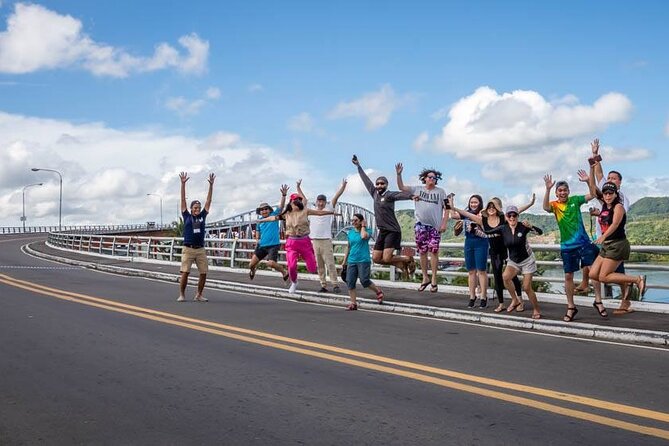
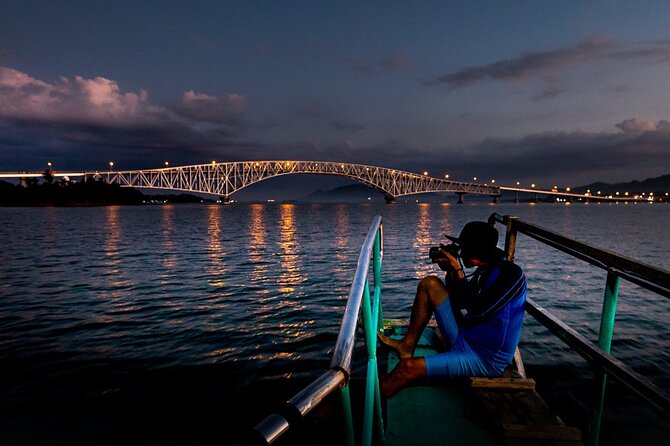
Next up is San Juanico Bridge, the link between Leyte and Samar. The tour calls it once the longest bridge in the Philippines, stretching 2.16 kilometers across seawater, and it treats it as an iconic site.
This stop is brief, about 15 minutes and free. But it is a great reset after government buildings and memorials. A bridge is not just a structure. It is movement, connection, daily life, and rebuilding. Standing near it while thinking about landings and storms makes the connection feel real.
Photo tip: this is usually where you can catch big geometry shots, wide angles, and “I am really here” images without needing any special equipment.
Madonna of Japan: peace symbolism with a WWII afterstory
Then you visit the Madonna of Japan, described as a symbol of peace between Filipinos and Japanese people. The monument was erected 33 years after World War II, in memory of the brave soldiers who fought and died in battle.
This stop is about 15 minutes and free. It can feel different from the other memorials because it shifts from wartime events to post-war reconciliation. That peace-focused angle helps you avoid ending the day with only grief. It nudges your mind toward how societies move forward.
If you are someone who reads symbolism in monuments, this is a good one. If you are not, it still works as a reflective stop because the “33 years after WWII” detail gives you a timeline for when rebuilding of relationships started.
Sto. Nino Church in Tacloban: typhoons, earthquakes, and shelter
Your final set of church-related history comes with Sto. Nino Church in Tacloban. The tour notes that this church has battled and sustained a few typhoons and earthquakes, and that it was partially damaged during Super Typhoon Haiyan. It also says the church provided cover during the disaster.
This is another 15-minute stop and free of admission fees. Churches often function as landmarks in more ways than one. They are faith spaces, but they are also meeting points, shelters, and a kind of community memory.
Even with a short visit, you get something valuable here: a look at resilience in everyday infrastructure. It is not a museum object or a monument plaque. It is a living building that has taken repeated hits and continues operating.
Price and value: what $51 buys in a full-day guided format
At $51 per person, this tour can feel like a deal because several practical costs are handled for you. You get an air-conditioned vehicle, pickup is offered, and lunch is included. You also get a guided history-heavy day that covers multiple free-entry sites and one museum stop where the admission ticket is included.
The other value piece is time. The day runs about 6 to 7 hours including travel between attractions. For Tacloban and Palo, that matters because moving between locations on your own can eat up your energy and your schedule. Here, the routing is already organized around the story you are trying to learn.
Also, the “private tour” setup is a sneaky value if you prefer conversation over crowd management. Only your group participates, so questions and pace control are easier.
Mobile ticket is included too, which is usually less hassle than paper tickets if you are moving around on a phone.
Logistics and pacing: plan for a packed day, not a slow wander
This is a full-day guided experience, starting at 8:30am, with most stops lasting around 15 minutes, and the museum at about 30 minutes. That kind of pacing works if you want breadth: WWII, Haiyan, cultural context, memorials, churches, and a bridge viewpoint in one shot.
The tradeoff is obvious: you will not have hours at each site. If you want to do a lot of independent reading, taking detailed photos, or sitting quietly for a long time, you will likely want to pair this with extra time in Tacloban.
One more note: the tour requires good weather. If it is canceled due to poor weather, you will be offered a different date or a full refund. That is worth keeping in mind if your schedule is tight.
Who should book this tour, and who might prefer something else
This tour is a great fit if you:
- Want context while visiting war and disaster-related sites, not just sightseeing
- Prefer a guided structure for a day that could otherwise feel overwhelming
- Care about how communities rebuilt after ST Haiyan, not only the storm impact
- Enjoy churches and memorials, plus at least one major scenic stop
It might be less ideal if you hate structured timing and want long, slow visits at a few places instead of quick stops across many. It is also not built around activities like biking, since bicycle use is not part of the tour.
If you are traveling with someone who is less interested in history, the scenic and symbolic stops help balance the day. Still, the core theme is remembrance and recovery, so keep that expectation.
Should you book the Full-Day Historical Heritage Guided Tour of Tacloban and Palo?
If your goal is to understand why Tacloban and Palo matter, book it. You are getting guided storytelling at multiple meaningful landmarks, plus lunch, pickup, and air-conditioned transport for a reasonable price. Most importantly, you are not only learning about WWII and ST Haiyan, you are also learning how the Waraynons survived and rebuilt.
I would especially recommend it if you only have one day in this part of Leyte. If you have more time, this tour can still be your anchor, then you can come back later for slower, self-guided visits to whichever sites hit you the most.
FAQ
What time does the tour start?
The tour starts at 8:30am.
How long is the tour?
It takes about 6 to 7 hours in total, including travel time between attractions.
How much does the tour cost?
The price is $51.00 per person.
Is pickup offered?
Yes, pickup is offered.
What’s included in the price?
The tour includes an air-conditioned vehicle and lunch. The Sto. Nino Shrine and Heritage Museum admission ticket is also included.
Are any entrance fees included or free?
Admission is free for the Leyte Landing Memorial, Palo Cathedral, M/V Eva Jocelyn Shrine, Tacloban City Hall, Leyte Provincial Capitol Building, San Juanico Bridge, Madonna of Japan, and Sto. Nino Church. The Sto. Nino Shrine and Heritage Museum admission ticket is included.
Is this tour private?
Yes. It is a private tour/activity, and only your group participates.
What if the weather is poor?
This experience requires good weather. If it is canceled due to poor weather, you will be offered a different date or a full refund.
Are service animals allowed?
Yes, service animals are allowed.
Freshly added in the Philippines
- Underground River with Lunch★ 3.6 · 5 reviews
- Underground River without Lunch★ 4.7 · 3 reviews
- Trekking to see the beautiful view of Cebu City★ 3.3 · 4 reviews
- Tri island tour: Naked Island, Daku Island and Guyman Island★ 5.0 · 3 reviews
- Siquijor Land Tour★ 4.5 · 12 reviews
- Siquijor: Island Tours and Packages★ 3.5 · 3 reviews
- Full-Day Private Siquijor Island Tour★ 3.5 · 3 reviews
- BOHOL ATV Tour★ 4.0 · 9 reviews
Historical Tours, compared.
Intramuros, Manila: Historical Bamboo Bike Tour
Read our review →
The Original Cebu City Historical and Food Walking Tour
Read our review →
Explore Intramuros: Introduction to Philippine History
Read our review →
Experience Manila’s Heritage: Intramuros & More in Half a Day!
Read our review →
Cebu: Exploring Cebu City’s rich history and Uphill Tour
Read our review →
Browse the lists this tour appears in