
REVIEW · INTRAMUROS TOURS
Explore Intramuros: Introduction to Philippine History
Intramuros packs centuries into a short walk. This small-group tour gives you a fast, human sense of Philippine history, from Spanish Manila to the scars of World War II, in about 3 hours. You start at San Agustin Church, then move site to site with an English-speaking guide who keeps the story clear and grounded.
What I love most is the way the tour is organized so you avoid the hassle of figuring out tickets and timing. All entrance fees are handled, and bottled water is included, so you can focus on the places instead of admin. The second big win for me is the pacing, lots of short stops (10 to 30 minutes each) that still cover major landmarks without eating your whole day.
One consideration: the schedule is tight. If you want to linger deep inside every building, you might feel a bit rushed, especially at the stops that are brief.
In This Review
- Key things I’d watch for before you go
- Why this 3-hour Intramuros history walk makes sense
- Meeting at San Agustin Church, finishing at Fort Santiago
- San Agustin Church: the old stone church and a WWII survivor
- What you might want to do here
- Museo San Agustin: Spanish galleons and everyday power
- Casa Manila: a lived-in snapshot of upper-crust 19th-century life
- Memorare Manila Monument and Manila Cathedral: two ways to read the city
- Fort Santiago: Spanish military power and the independence story
- Price and value: what your $55 actually buys
- Pacing, group size, and when the tour feels perfect or rushed
- What makes this route feel like real Intramuros, not just checklists
- Who should book this Intramuros tour, and who might want a different plan
- FAQ
- How long is the Intramuros history tour?
- Where do I meet the guide, and where does the tour end?
- Is the tour admission fee included?
- What is included in the $55 price?
- How big is the group?
- Do I need private transportation?
- What happens if the weather is bad?
- Should you book Explore Intramuros: Introduction to Philippine History?
Key things I’d watch for before you go
- Meet at San Agustin Church, end at Fort Santiago for an easy, logical route through the walled city
- Short stops, big context, designed for first-timers who want the essentials fast
- Entrance fees included so you do not pay on the spot
- Small group (max 15) keeps the tour from feeling like a cattle stampede
- English-speaking guide with plenty of room for questions
- All entrance fees covered means better value than most pick-and-pay tours
Why this 3-hour Intramuros history walk makes sense
If you only have a few hours in Manila, you need your time to count. This tour is built around a half-day format, roughly 3 hours, then you get the rest of your day free. That matters in Intramuros because the sights are concentrated, but the weather and heat can make long walks feel harder than you expect.
The format also helps you get orientation fast. Intramuros can feel like a maze of walls, churches, and fortifications, and it is easy to miss the story connecting it all. Here, the guide gives you a “how it connects” view, with stops that cover Spanish-era power, everyday life, and the WWII chapter that changed the city.
And yes, it is also a value play. $55 per person is not “cheap,” but when entrance fees are included and you avoid the spot-by-spot payment hassle, the price starts to make sense for a time-squeezed trip.
More History Tours in Manila
- Intramuros, Manila: Historical Bamboo Bike Tour
★ 4.8 · 583 reviews - Experience Manila’s Heritage: Intramuros & More in Half a Day!
★ 5.0 · 76 reviews - Tagaytay, Taal Volcano & Heritage Town: A Journey of Discovery
★ 5.0 · 29 reviews
Meeting at San Agustin Church, finishing at Fort Santiago
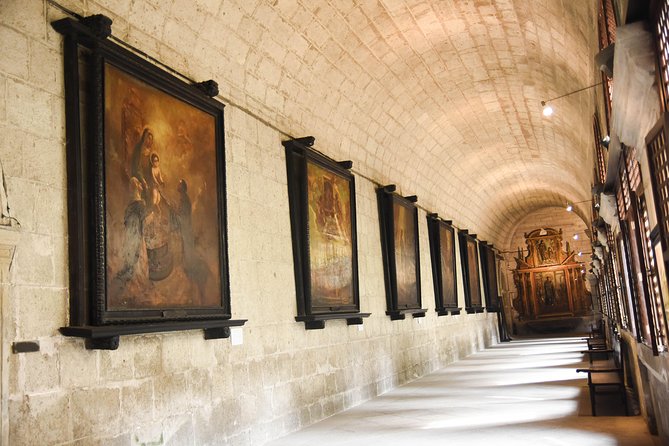
Plan to start at San Agustin Church on General Luna St, inside Intramuros. Your tour ends at Fort Santiago, also inside Intramuros, so you are not backtracking to the starting point. That is a small thing, but it changes how you plan your afternoon.
You will also have a mobile ticket, which is convenient when you are moving around in a busy city. The tour is sold as a small-group experience with a cap of 15 travelers, which usually means less waiting and more time spent actually looking at what you came for.
Also note the tour is specifically designed with “good weather” in mind. Intramuros is an outdoor walking circuit, so if conditions are poor, the operator may shift dates or refund. If you are picking a day for Manila, choose one where your schedule can flex.
San Agustin Church: the old stone church and a WWII survivor
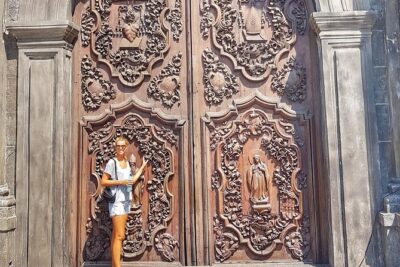
The tour kicks off at San Agustin Church, the Immaculate Conception Parish. This stop is famous for two reasons. First, it is described as the oldest stone church in the country. Second, it is the only survivor of the bombing of Manila during WWII.
That combination makes the church feel more than just historic. It is a living marker of continuity, a place where the architecture still speaks even after the city endured devastation. When you stand in a space like this with context, the walls do not feel like decorations. They feel like proof that the past stayed in place through upheaval.
The practical side is good too: this is a short stop, about 10 minutes. That is enough time to see the key features the guide points out without turning the morning into a slog.
What you might want to do here
Go in with an eye for contrasts: the long Spanish-era story on one side, then the WWII survival story on the other. Even if you are not a “church person,” the WWII angle alone makes this stop meaningful.
More Intramuros walks:
- Experience Intramuros with Bamboo Bicycle – Ecotours
★ 5.0 · 508 reviews - Manila: Intramuros, Chinatown, and Old Manila Half-Day Tour
★ 4.8 · 475 reviews - Manila: Guided Sunset Bamboo Bike Tour in Intramuros
★ 4.8 · 119 reviews - Manila by Night: Discovering City Highlights with Intramuros
★ 4.5 · 70 reviews
Museo San Agustin: Spanish galleons and everyday power
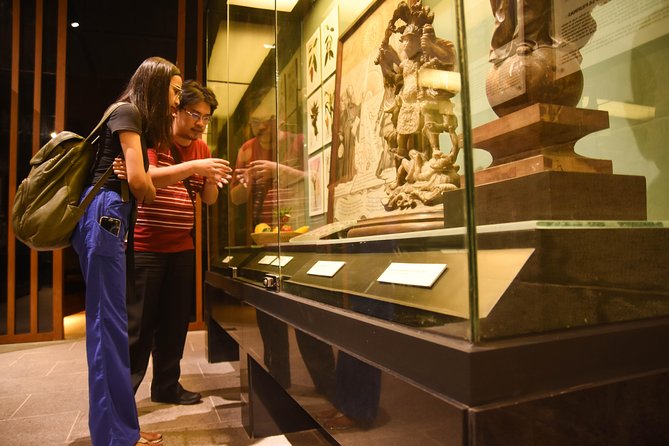
Right beside the church is Museo San Agustin, and the museum stop is built to widen your view beyond architecture. This is where you learn about the Spanish Galleon Trade, a system that connected Manila to the larger world. You also get a Catholic Church angle, with artifacts traced through the centuries.
The museum stop is about 30 minutes, which is a good length. Long museum visits can be tiring in the heat, but too-short ones can feel like you only got a passing glance. This one sits in the middle, enough to take in the storyline and still move on.
The value here is that you get a “why this mattered” explanation. Trade is not just ships and dates, it is people, wealth, and influence. And once you understand that, the next stops in Intramuros start to click as pieces of the same puzzle.
Casa Manila: a lived-in snapshot of upper-crust 19th-century life
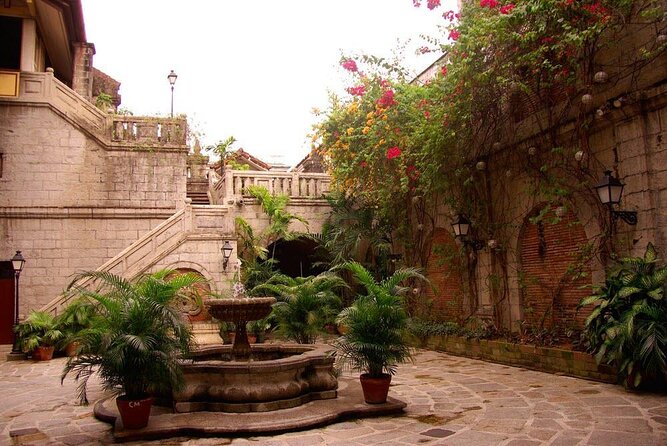
Then you head to Casa Manila, a house recreation from the turn of the 19th century. The stop focuses on what homes of the upper crust of society looked like in old Manila. In practical terms, this is one of the best ways to understand history without needing a textbook.
A recreated house is not the same as the original, but it can still be revealing. It shows what was valued, how rooms were used, and what “normal life” meant for different social classes. If your goal is to understand the human scale of colonial Manila, this stop helps.
The timing is about 30 minutes. That is long enough to walk through and take it in, but not so long that you lose momentum. You come away with more than just names of places. You come away with a mental picture.
Memorare Manila Monument and Manila Cathedral: two ways to read the city
Next up is the Memorare Manila Monument, a memorial for innocent casualties of WWII. The point here is remembrance, but the guide also ties it back to the Philippines’ role in the second great war. This stop feels like an emotional reset in the middle of the tour’s historical timeline.
The stop is brief, about 10 minutes, but short does not mean shallow. WWII can be abstract unless someone connects it to local impact. A monument gives you that anchor in one visual moment.
After that, you visit Manila Cathedral, described as the seat of the Catholic Church in the Philippines. Like the church at the start, this is a religious landmark, but the way the stops are placed in the route matters. You are comparing the “survivor” narrative at San Agustin with the broader role of the Catholic Church across time.
Again, this stop is brief, around 10 minutes. Treat it like a quick landmark check, then let the guide’s context do the heavy lifting.
Fort Santiago: Spanish military power and the independence story
The tour finishes at Fort Santiago, an old Spanish military fort inside Intramuros. This is one of the most important stops because it connects physical defenses to political change.
Here, the guide explains the fort’s role and ties it to Philippine heroes and the movement for independence from Spain. It is history told through stone, layout, and strategy, not just dates on a page.
The stop lasts about 30 minutes, which is helpful because forts can take a moment to “read.” If you only glance at it, it can feel like walls. With the guide’s framing, you start seeing the fort as a system built to control, protect, and intimidate.
Finishing here also works well for your afternoon plans inside Intramuros, since you can naturally continue exploring nearby without needing to travel back to the start.
Price and value: what your $55 actually buys
At $55 per person for around 3 hours, this tour sits in the mid-range for Intramuros guiding. The big reason it feels worth it is that it is not a “see three buildings and hope for the best” setup.
Here is what your money covers:
- English-speaking guide
- Bottled water
- All entrance fees (so you do not pay on the spot)
- A group format capped at 15 travelers
- A short walking route that hits the major anchors of Intramuros
When entrance fees are included, your value is less fragile. You do not lose money if you end up skipping a museum wing because of lines or confusion. You just follow the schedule.
Also, group discounts and a mobile ticket are mentioned in the tour details. Those small logistics features usually mean less friction on the day you go.
In plain terms, I think this is a good buy if you want the highlights with context and do not want to spend your precious Manila hours managing tickets.
Pacing, group size, and when the tour feels perfect or rushed
With a maximum group size of 15, you should expect a manageable pace. A lot of the standout feedback is about guides being funny, interactive, and able to turn history into something you can picture. Names that show up include Jian, Jerome, and Patrick, and the pattern is consistent: people praise the guide’s ability to make the story clear and keep questions welcome.
That said, short stops mean you trade depth for breadth. One experience got criticized for being rushed and not finishing every itinerary stop. That is the tradeoff with a tour built to cover multiple major landmarks in a half-day slot.
Here is how I would handle that risk:
- Bring your curiosity, but accept that each location is a snapshot, not a long study session.
- If you are the type who wants to linger, plan extra free time after, especially near Fort Santiago.
What makes this route feel like real Intramuros, not just checklists
This tour succeeds when you see the connections between stops. San Agustin Church sets the stage with survival and age. Museo San Agustin expands the story into trade and the Catholic Church’s historical role. Casa Manila adds everyday life and class. Memorare Manila Monument brings the WWII chapter into focus. Manila Cathedral reinforces religious authority. Fort Santiago turns military architecture into an independence narrative.
That sequencing is why it works for first-time visitors. You stop seeing Intramuros as a string of monuments and start seeing it as a system of influence, faith, and resistance.
It also helps that the tour includes a built-in break in the form of short stop lengths and an overall compact schedule. If you have limited energy, this structure is easier to tolerate in the heat.
Who should book this Intramuros tour, and who might want a different plan
This tour is a great fit if you:
- Want a first-pass orientation to Manila history
- Prefer guided context over self-guided wandering
- Like a mix of Spanish-era Manila and WWII-related sites
- Have limited time and want the rest of your day free
- Are traveling solo and want a friendly, question-friendly experience, since the guides are often praised for attentiveness
It may not be the best choice if you:
- Want long time inside each site, museum-style
- Get irritated by tight schedules where every stop is time-boxed
- Are looking for a very detailed, architecture-heavy deep visit rather than a guided overview
FAQ
How long is the Intramuros history tour?
It is listed as about 3 hours.
Where do I meet the guide, and where does the tour end?
You meet at San Agustin Church on General Luna St in Intramuros. The tour ends at Fort Santiago, also in Intramuros.
Is the tour admission fee included?
Yes. The tour includes all entrance fees, and admission fees are taken care of so you do not pay on the spot.
What is included in the $55 price?
Included are bottled water, all entrance fees, and an English-speaking guide.
How big is the group?
The tour has a maximum of 15 travelers.
Do I need private transportation?
Private transportation is not included.
What happens if the weather is bad?
The experience requires good weather. If it is canceled due to poor weather, you will be offered a different date or a full refund.
Should you book Explore Intramuros: Introduction to Philippine History?
I would book it if you want a smart half-day plan in Intramuros that gives you real context fast. The best reasons are the included entrance fees, the compact 3-hour route from San Agustin Church to Fort Santiago, and the guides who are repeatedly praised for making the story clear and fun.
Skip it or adjust expectations if you are the type who needs to sit with a museum for hours. This is built to cover key sites, not to replace slow, independent exploring.
If you want to leave Intramuros with the big story in your head, this tour is a strong match.
Freshly added in Manila
- Underground River with Lunch★ 3.6 · 5 reviews
- Unforgettable Manila Fishing Village Day Excursion 2024★ 5.0 · 4 reviews
- Tagaytay Adventure: Volcano Views, Countryside, Market & Cruise!★ 4.5 · 14 reviews
- 3 Days Private Tour in Banaue Ifugao visiting Batad Rice Terraces★ 3.5 · 3 reviews
- Tagaytay + Hidden Valley Springs: A Scenic Escape w/ Transfers★ 4.0 · 4 reviews
- Tagaytay Day Tour sightseeing with Panoramic Taal volcano view★ 5.0 · 6 reviews
- Shared Old Manila Tour★ 5.0 · 5 reviews
- Cultural Dinner and Show in Manila★ 5.0 · 4 reviews
Intramuros Tours, compared.

Intramuros, Manila: Historical Bamboo Bike Tour
Read our review →
Experience Intramuros with Bamboo Bicycle – Ecotours
Read our review →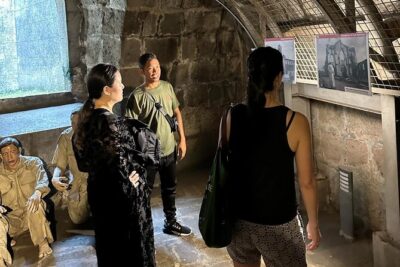
Manila: Intramuros, Chinatown, and Old Manila Half-Day Tour
Read our review →
Manila Old and New: Sightseeing Tour Including Intramuros and Fort Santiago
Read our review →
Manila: Guided Sunset Bamboo Bike Tour in Intramuros
Read our review →
Experience Manila’s Heritage: Intramuros & More in Half a Day!
Read our review →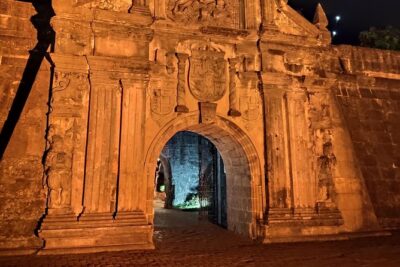
Manila by Night: Discovering City Highlights with Intramuros
Read our review →Browse the lists this tour appears in