
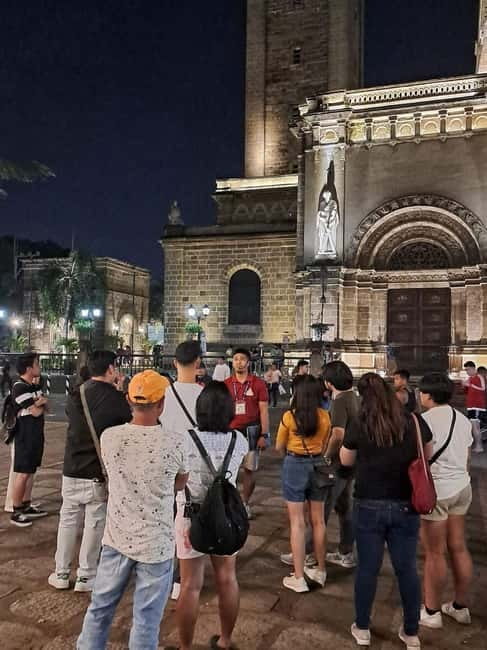
REVIEW · INTRAMUROS TOURS
A Night in Old Manila: Intramuros Walking Tour
Night turns Intramuros into a living set. With DOT-accredited guides like Steven and Cedhie, you get stories you can actually follow, from Fort Santiago to Rizal’s last days, while the evening lights make old stone feel close and real. I especially love how the guide explains tough parts of Manila’s past in plain language, and I love the atmosphere shift as the walking route turns into a nighttime photo path.
One thing to consider: this is a public joiner tour with several short guided site visits, so you’ll keep a steady pace and you should expect some time indoors or in guarded, ticketed spaces. If you hate crowds or you need lots of downtime, this may feel a little structured.
In This Review
- Key points before you go
- Why Intramuros by night changes the whole story
- Meeting at Fort Santiago, and the timing that keeps it relaxed
- Fort Santiago: the core stop, with Rizal and the dungeon
- Manila Cathedral and Memorare Manila 1945: where the wartime memory lands
- San Agustin Church and Plaza San Luis Complex: classic streets, guided context
- Casa Manila at the end: your “colonial life” payoff
- Guide quality is the real differentiator on a night tour
- Price and value: why $23 can feel fair here
- Practical tips so the night stays pleasant
- Who should book this night walk
- Should you book A Night in Old Manila Walking Tour?
- FAQ
- Where do I meet the guide?
- What time does the tour start?
- How long is the walking tour?
- What languages are available for the tour?
- Is the tour wheelchair accessible?
- Is it a private tour or a public joiner tour?
- What should I bring, and what is not allowed?
- Is free cancellation available, and can I reserve without paying now?
Key points before you go
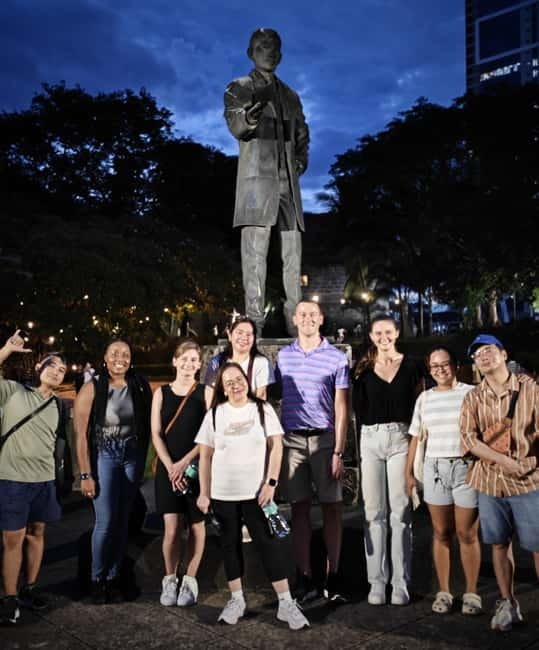
- Fort Santiago after dusk: the fort, the dungeon, and Rizal-linked stops hit harder when it is dim and quiet.
- DOT-accredited guidance: English and Tagalog delivery, with clear explanations and plenty of room for questions.
- WWII remembrance stops: you pass major landmarks tied to the city’s wartime memory, not just pretty walls.
- Church and plaza timing: the route includes short, guided looks rather than long museum marathons.
- Casa Manila finish: you end with a colonial-life snapshot that helps the whole night click.
- Easy prep: you are told in advance to bring an umbrella and water, which matters in Manila.
Why Intramuros by night changes the whole story
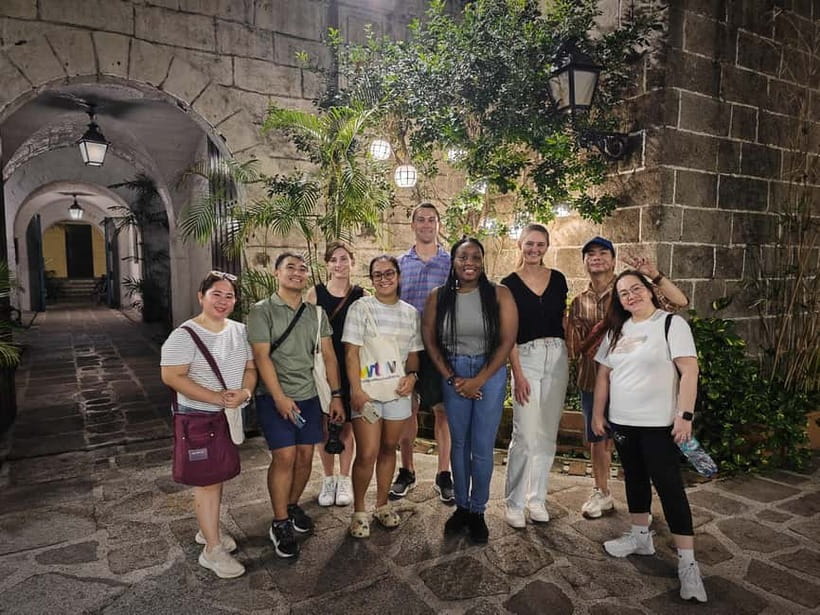
Intramuros by daylight is nice, but at night it turns into a different experience. Street lighting reflects off old walls. The air feels cooler. The pace slows just enough that the history sticks. Instead of seeing landmarks as separate spots, you start to feel how they connect as one walled world.
What makes this tour work well is the way the guide frames each stop. You are not just getting dates. You get cause-and-effect, who was where, and why specific places mattered. The result is that Fort Santiago feels like more than a fort. It feels like a pressure point in Philippine history. And because the sites are spread along a walk you can do without rushing, the night atmosphere does not become an afterthought. It becomes part of how you understand the city.
More Walking Tours in Manila
- Manila: Street Food and Drinks Walking Tour with Tastings
★ 4.8 · 114 reviews - Manila: Sightseeing and Food Walking Tour with Tastings
★ 4.7 · 68 reviews - Manila: Intramuros Walking Tour.
★ 4.9 · 63 reviews
Meeting at Fort Santiago, and the timing that keeps it relaxed
This tour starts in the Intramuros area at the Fort Santiago Ticket Booth. Plan for a call time of 5:15 PM, with the walk beginning at 5:30 PM. You are basically choosing your moment: late enough for lights to kick in, early enough that you are not dragging in full darkness for all two hours.
The meeting is simple, and that reduces stress. You also get support in advance through WhatsApp or Viber if you need help arriving. One practical win from recent participants: the guide reminder about bringing an umbrella. That might sound small, but Manila weather can change quickly, and having a heads-up helps you enjoy the walk instead of getting soaked and grumpy.
You should also know this is a public group with a max of 25 participants per group. That is large enough to feel lively, but small enough that you can still hear instructions. If you want a super private experience, the option for a private group is available.
Fort Santiago: the core stop, with Rizal and the dungeon
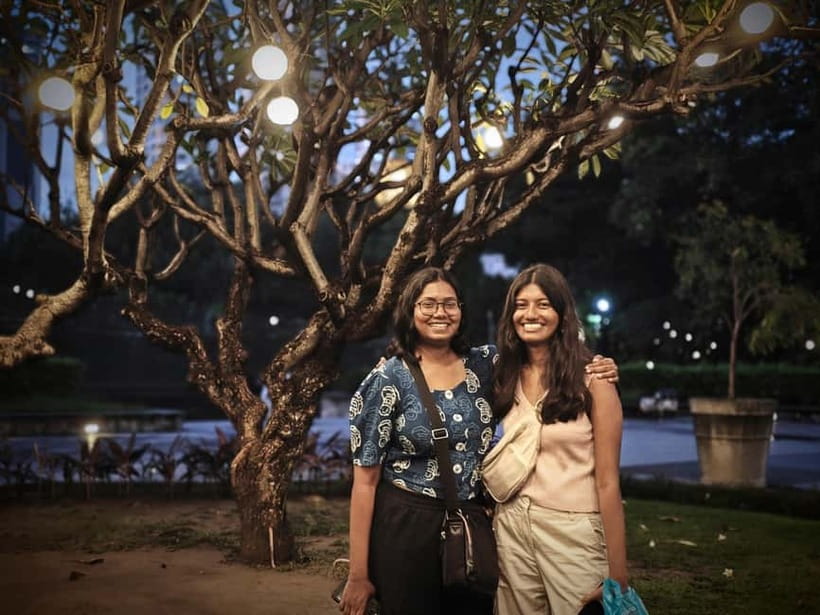
Fort Santiago is the main event, and it is where the tour earns its name. You get about one hour here, and the guide focuses on how the fort shaped events over time. The biggest reason this stop is so effective at night is tone. Fort walls and dark corridors feel more serious after sunset, and it helps you understand why people remember this place with such intensity.
A highlight is the dungeon visit, with wartime stories that make the space feel like more than architecture. You get the kind of context that turns a difficult topic into something you can hold in your head, instead of just hearing vague tragedy and moving on.
You also trace Dr. Jose Rizal’s final days, including his chapel cell. Even if you already know Rizal’s name, you will probably learn something new about how those final moments connect to the geography of the fort. The guide’s approach matters here. In reviews, people praised how Cedhie and Steven made complicated material easier to grasp, using period photos at times to give details a visual anchor. If you like history explained in human terms, this part is likely to be your favorite.
Possible drawback: Fort Santiago is the longest stop. If you prefer quick photo breaks over guided storytelling, you may want to lean into comfortable listening and give yourself permission to enjoy it slowly.
Manila Cathedral and Memorare Manila 1945: where the wartime memory lands
After Fort Santiago, the tour keeps moving to additional heritage sites with short guided looks, around 15 minutes each. That structure works for a night walk because it gives you variety without turning your evening into a long indoor slog.
First up is Manila Cathedral. You get a brief guided visit, which is plenty if you are there to understand what you are looking at rather than to read every plaque. Even with limited time, the guide can point out what matters, and you will feel more oriented as you walk.
Then you head to Memorare Manila 1945. This is one of the stops that helps the tour feel grounded. You are not only seeing colonial-era style. You are seeing how Manila remembers the 1945 period, and how the city carries that memory forward. Even if you are not a museum person, this kind of landmark can change how you see the streets around it. The guide gives meaning to what you might otherwise pass by.
The practical trick here is to stay present. Short stops can turn into quick glances if you drift. If you want the value, ask at least one question while you are there. Steven, for example, was described as easy to talk to, and that matters on a night tour when you cannot linger forever.
More Intramuros walks:
- Intramuros, Manila: Historical Bamboo Bike Tour
★ 4.8 · 583 reviews - Experience Intramuros with Bamboo Bicycle – Ecotours
★ 5.0 · 508 reviews - Manila: Intramuros, Chinatown, and Old Manila Half-Day Tour
★ 4.8 · 475 reviews - Manila: Guided Sunset Bamboo Bike Tour in Intramuros
★ 4.8 · 119 reviews
San Agustin Church and Plaza San Luis Complex: classic streets, guided context
San Agustin Church and the Plaza San Luis Complex are the next pieces of the puzzle. Each one gets about 15 minutes, so think of these as guided orientation stops. You are getting a focused look at places that help explain Intramuros as a living cultural zone, not a single-photo postcard.
San Agustin Church is a chance to see one of the most recognizable religious sites in the area, and to understand why this kind of landmark appears in the story of old Manila again and again. The guide likely connects architecture and faith to the way the Spanish-era city formed its identity.
Plaza San Luis Complex adds a different texture. Plazas and complexes are where everyday movement and city life become visible, even when you are only passing through. The guided context helps you notice details that you might otherwise overlook in a quick walk.
A small consideration: churches are not always the most forgiving places for very tall strollers or slow mobility. The tour is wheelchair accessible, but you should still be ready for uneven walking surfaces and short transitions between stops.
Casa Manila at the end: your “colonial life” payoff
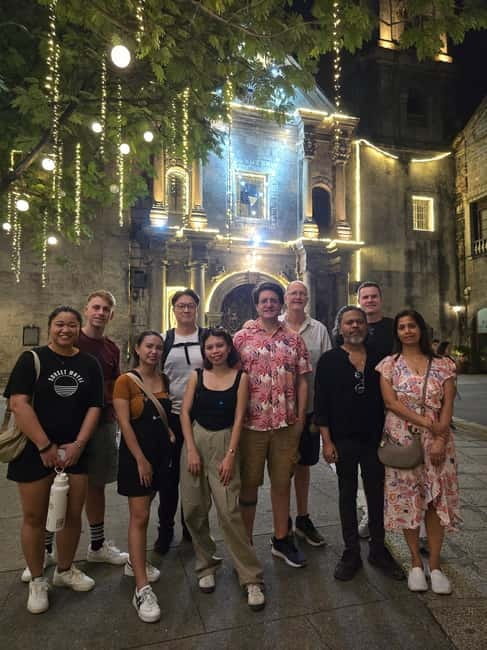
The tour finishes at Casa Manila. This ending is smart because it shifts you from the heavier emotional tone of wartime remembrance toward a more everyday view of colonial-era living. You get a guided look that helps the earlier stops make sense as part of a bigger picture.
If you have ever wondered why Intramuros is more than a fort and a few churches, Casa Manila usually answers that. It gives you the feeling of how people lived, not just what happened to the city.
This also helps families. One participant brought an 8-year-old daughter and said her expectations surprised her in a good way. That makes sense because Casa Manila provides a more approachable ending. It can feel like stepping into a history classroom built from rooms rather than timelines.
Guide quality is the real differentiator on a night tour
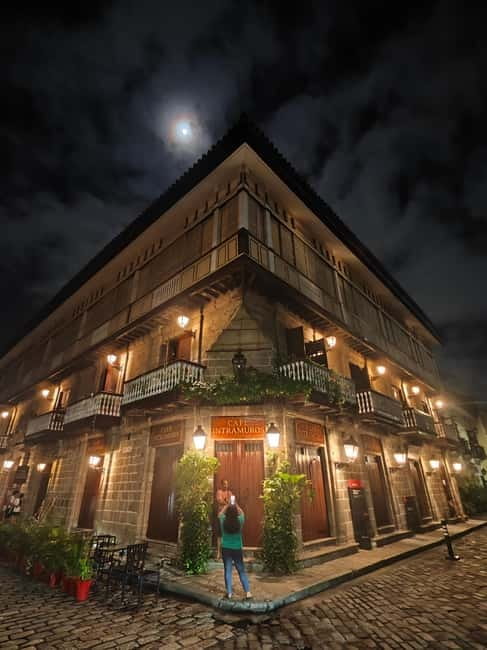
The tour leans hard on guidance, and that is a good use of money. The guide is Department of Tourism accredited and leads in English and Tagalog. That combination matters in Manila because you can ask clarifying questions without feeling stuck.
What stands out from the feedback is not just knowledge. It is the ability to explain hard things simply. Cedhie was praised for making Manila’s difficult story easy to follow, including using old photos to make past scenes feel tangible. Steven was repeatedly described as passionate, knowledgeable, and very approachable, which is ideal for a night walk where you might want to ask “why here” questions on the spot.
The pace also seems tuned for first-time visitors. One review mentioned liking the second half because the stops and explanations stayed engaging even if you are not naturally drawn to museums. In practice, that means the guide likely adjusts their approach and keeps you moving.
Price and value: why $23 can feel fair here
At $23 per person for about two hours, this tour is not trying to be a budget bargain, but it also does not ask you to pay premium luxury prices. The value comes from three things:
1) You get a DOT-accredited English-speaking local guide with guided entry across multiple sites.
2) Admission fees are included, so you are not doubling back later to pay.
3) You get bottled water and photo opportunities on key landmarks, which matters on a walking tour at dusk.
Add it up and you are basically buying: a guided route that would be harder to piece together yourself at night, plus entry into several sites, plus local storytelling. If you try to do Intramuros alone without a plan, you might spend the time figuring out where to go and still miss the “why it matters” context.
One caution on value: you are paying for guidance, not for free time. If you expect long self-guided wandering at each stop, this may feel tight. But if you want a structured night introduction, it is priced like it understands what you are buying.
Practical tips so the night stays pleasant
A good tour does two things: it tells you what to do, and it helps you avoid avoidable problems. Here are the practical items you should take seriously.
Bring an umbrella and water. The reminder is not just friendly, it is useful. Manila evenings can turn drizzly, and an umbrella keeps you comfortable and lets you keep walking.
Wear shoes for uneven, old-stone streets. The route is walkable, but you are on cobblestones and historic pathways. Plan for a steady pace.
Not allowed: alcohol and drugs. That is standard for many tours, but it is worth noting because some nightlife areas around Intramuros can attract people who want to linger.
Also, the tour is not suitable for people over 95 years. That tells you the tour expects a certain walking ability and pace.
If you have kids, this can work. Just prepare them for short guided stops and some walking. The structure can help younger visitors stay oriented if they follow what the guide is doing.
Who should book this night walk
You will probably love this tour if:
- you like history but want it explained in a way that you can actually follow at night
- you want a guided route that covers major Intramuros landmarks without you building the plan
- you enjoy photos that capture how old buildings look under evening lights
- you want a mix of wartime memory and colonial-era context
You might not love it if:
- you want a slow, freeform stroll with lots of independent time
- you strongly dislike churches or guided indoor sites
- you need long rests between stops
Because it is wheelchair accessible and group size is kept to a maximum of 25, it can also be a good shared option for mixed travel styles, especially compared with very long private museum days.
Should you book A Night in Old Manila Walking Tour?
My take: if you want a high-quality intro to Intramuros that makes the places feel connected, book it. The strongest reason is the guide. When the tour is led by people like Steven or Cedhie, the night does not turn into a random walk past famous walls. It becomes a story you can understand.
I would book it if you can handle a steady two-hour walk and you are okay with short guided visits. The $23 price becomes easier to justify when admission fees and the guide are included, and when the route covers Fort Santiago, wartime remembrance landmarks, and Casa Manila in one evening.
If your top priority is total flexibility at each stop, you may prefer a self-paced option. But if your goal is meaning plus atmosphere, this one is a solid pick for an evening in Old Manila.
FAQ
Where do I meet the guide?
Meet your guide at the Fort Santiago Ticket Booth.
What time does the tour start?
Call time is 5:15 PM, and the tour starts at 5:30 PM.
How long is the walking tour?
The tour duration is about 2 hours.
What languages are available for the tour?
The tour is available in English and Tagalog.
Is the tour wheelchair accessible?
Yes, the tour is wheelchair accessible.
Is it a private tour or a public joiner tour?
It is a public tour with joiners (maximum 25 per group), and a private group option is also available.
What should I bring, and what is not allowed?
Bring an umbrella and water. Alcohol and drugs are not allowed.
Is free cancellation available, and can I reserve without paying now?
Yes. You can cancel up to 24 hours in advance for a full refund. You can also reserve now and pay later.
Freshly added in Manila
- Underground River with Lunch★ 3.6 · 5 reviews
- Unforgettable Manila Fishing Village Day Excursion 2024★ 5.0 · 4 reviews
- Tagaytay Adventure: Volcano Views, Countryside, Market & Cruise!★ 4.5 · 14 reviews
- 3 Days Private Tour in Banaue Ifugao visiting Batad Rice Terraces★ 3.5 · 3 reviews
- Tagaytay Day Tour sightseeing with Panoramic Taal volcano view★ 5.0 · 6 reviews
- Tagaytay + Hidden Valley Springs: A Scenic Escape w/ Transfers★ 4.0 · 4 reviews
- Cultural Dinner and Show in Manila★ 5.0 · 4 reviews
- indigenous Forest experience Manila 2023★ 5.0 · 4 reviews
Intramuros Tours, compared.
Intramuros, Manila: Historical Bamboo Bike Tour
Read our review →
Experience Intramuros with Bamboo Bicycle – Ecotours
Read our review →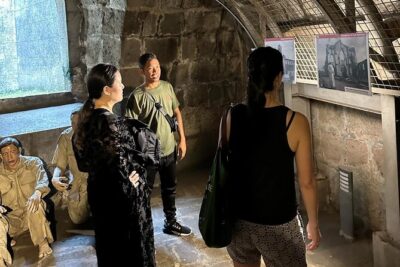
Manila: Intramuros, Chinatown, and Old Manila Half-Day Tour
Read our review →
Manila Old and New: Sightseeing Tour Including Intramuros and Fort Santiago
Read our review →
Manila: Guided Sunset Bamboo Bike Tour in Intramuros
Read our review →
Explore Intramuros: Introduction to Philippine History
Read our review →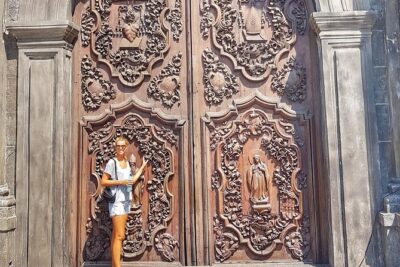
Experience Manila’s Heritage: Intramuros & More in Half a Day!
Read our review →Browse the lists this tour appears in