
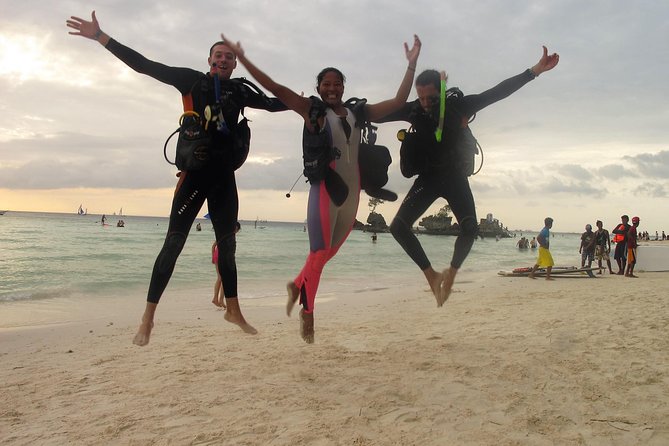
REVIEW · FREEDIVING & DIVE COURSES
WaterColors – Open Water Diver Certification in Boracay
A warm schedule, clear instruction, and the kind of patience you need for a first certification. This PADI open-water course in Boracay takes you from classroom theory to shallow, then into the sea with a supported plan. I especially like the tight instructor attention I’ve seen described by instructors like Jimmy and Darwin, and the way the training builds step-by-step across days.
One thing to plan for: the full program depends on good weather and a medical/health-check process, so you’ll need to get paperwork done before you show up.
If you’re coming to Boracay mainly for your first “real” underwater skills (not just a fun day in the water), the structure is the point. The course runs about 4 days, uses your own instructor support, and includes course materials plus certification processing, so you spend less time chasing admin and more time practicing.
In This Review
- Key reasons this course is worth your time
- WaterColors on White Beach: the meeting point that keeps things simple
- The 4-day flow that actually gets you certified (theory to open-water sessions)
- Day 1: paperwork, classroom theory, then your first open-water session
- Day 2: more confined skills, plus open-water sessions back to back
- Day 3: theory refresh, confined practice, then Open Water Session 4
- Day 4: catch-up, final exam, then certification paperwork
- Confined-water practice in shallow to deeper areas: where confidence gets built
- Open-water boat sessions around Boracay: what makes the learning feel real
- Instructor support, equipment, and the comfort of a small group
- Price and value: what $545 buys, and what you’ll still pay for
- Packing and planning that keeps your course on track
- Medical form and health questionnaire
- Height and weight needed at booking
- Flight timing
- What to bring
- Who this 4-day open-water certification is best for
- Should you book WaterColors for PADI open-water certification in Boracay?
- FAQ
- What does the course include?
- How long is the Boracay course?
- What are the main parts of the training?
- How many open-water sessions will I do?
- What is the minimum age to participate?
- Do I need medical paperwork before I go?
- Is transportation from my hotel included?
- Can I cancel for a full refund?
Key reasons this course is worth your time
- Small group size (max 15), which usually means faster feedback during skills practice
- Full PADI pathway: theory, confined-water skills, then open-water boat sessions
- Instructor support you can feel: calm explanations, patient coaching, and safety checks described by staff like Jimmy and Darwin
- Boat transport included for the open-water parts, so you’re not scrambling for logistics
- A built-in catch-up day on Day 4, with a final exam and certification paperwork time
- Equipment provided, so you can travel lighter and focus on learning
WaterColors on White Beach: the meeting point that keeps things simple
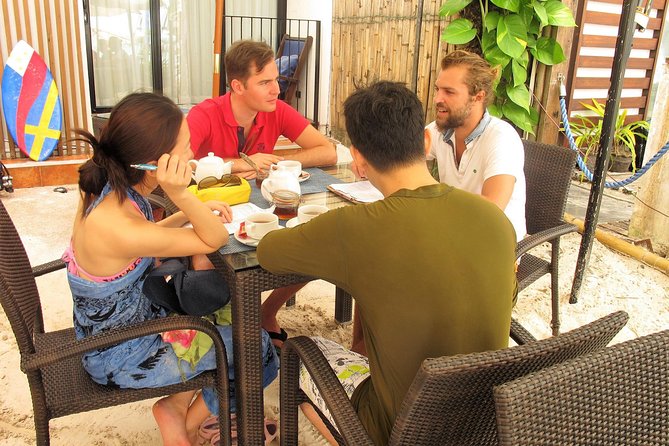
WaterColors’ base is on Boracay’s White Beach area, Station 1, near Willy’s Rock and close to Balabag Plaza. That matters more than it sounds, because a certification course is basically one long rhythm of theory, practice, eat, repeat. Being near the beach helps you keep the day from feeling like constant transit.
The course meeting point stays consistent: you start there and the activity ends back at the same place. You should also expect the center to operate on a broad daily window (8:00 AM to 8:00 PM), which gives them flexibility when weather or timing changes.
Practical tip: if you’re staying on Boracay, Station 1 is often convenient because it’s central for moving around, and it keeps early starts from turning into a commute. If you’re staying farther away, plan for time buffers on mornings, especially Day 2 and Day 3 when the schedule starts early.
More Dive Courses in Panay Island:
- Discover Scuba Diving in Boracay with U/W Photo and Video
★ 5.0 · 14 reviews - WaterColors – PADI Scuba Diver Certification in Boracay
★ 5.0 · 12 reviews - Boracay PADI Discover Scuba Diving
★ 5.0 · 9 reviews
The 4-day flow that actually gets you certified (theory to open-water sessions)
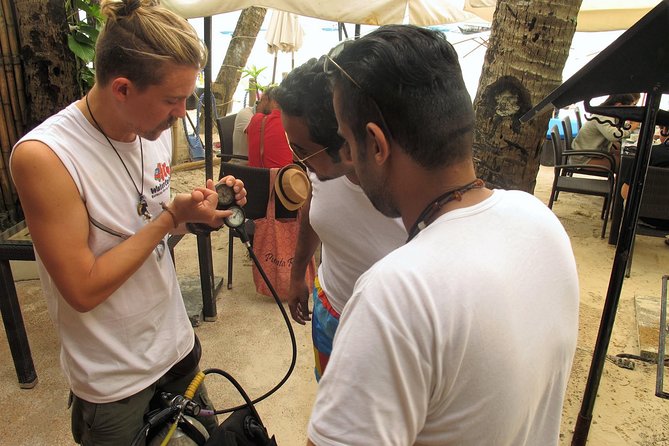
This course is laid out like a learning staircase. The goal is not just to see the water, it’s to master skills to PADI standards and earn certification. The schedule has three repeating ingredients:
1) short theory blocks
2) controlled skills practice
3) open-water application with the instructor guiding depth and pace
Day 1: paperwork, classroom theory, then your first open-water session
Day 1 begins with registration and documentation at 10:00 AM. That’s followed by Dive Theory from 11:00 AM, including briefing, videos, reading, knowledge reviews, quizzes, and log-style work (which helps you organize what you learned and what you’ll practice next). You also get a debrief at the end.
Then you break for lunch around 12:00 PM. After that comes confined-water training at 1:00 PM, moving from the shallow zone into deeper water where you can’t stand up. This is where you learn how skills feel with buoyancy and your own body positioning.
Your first open-water boat session is scheduled for 3:00 PM when you’re ready. By the end of the full course, the program is designed for 5 open-water sessions total, which is a strong practice volume for first-timers.
The day closes with logging and theory work at 4:30 PM, which is a big part of why the course ends with a certification exam on Day 4.
Day 2: more confined skills, plus open-water sessions back to back
Day 2 starts early with confined-water training at 8:00 AM, which sets the tone: you’re not allowed to forget what you learned yesterday. At 9:00 AM, you move into Open Water Session 2.
After a theory block at 11:00 AM and lunch around 12:00 PM, there’s another confined-water training segment at 1:30 PM. Then you head out for Open Water Session 3 at 3:00 PM.
You’ll finish with logging and theory at around 4:00 PM. The pattern here is smart. Each open-water session is paired with skills work that corrects problems before they become bad habits.
A different kind of day in the islands:
- Boracay Sunset Cruise with Party DJ & Unlimited Food and Drinks
★ 5.0 · 211 reviews - 4 Hour Private Boracay Island Hopping Tour
★ 5.0 · 167 reviews - Boracay Island Hopping + Hot Kawa + Parasailing + Helmet Diving
★ 3.0 · 10 reviews - BORACAY ISLAND HOPPING TOUR with LUNCH
★ 3.0 · 10 reviews
Day 3: theory refresh, confined practice, then Open Water Session 4
Day 3 keeps the rhythm but shifts more weight to preparation. You have theory at 8:00 AM, then confined skills at 10:00 AM, lunch at 12:00 PM, and Open Water Session 4 at 1:00 PM.
After that, you’ll spend time on logging and theory, plus any catch-up tasks that didn’t get completed earlier.
Day 4: catch-up, final exam, then certification paperwork
Day 4 runs 8:00 AM to 5:00 PM, and that long window is intentional. It’s for catch-up on any missed skills or theory parts, then the final exam, then paperwork for certification processing. The course ends back at the meeting point, and yes, there’s a celebration vibe built in.
For you, that means you should plan your last day in Boracay thoughtfully. If you schedule flights or tours immediately at night, keep a buffer. You don’t want to rush out while you’re still waiting on the final exam or paperwork.
Confined-water practice in shallow to deeper areas: where confidence gets built
Confined-water training is the unsung hero of a good certification course. It’s where you learn the mechanics without the sea adding chaos.
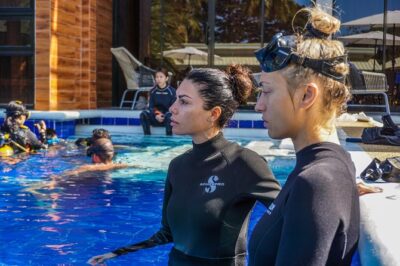
In this program, Day 1 confined-water training starts in shallow water and gradually moves to areas too deep to stand up. That detail is important. Learning in knee-deep water is one thing, but learning when you’re fully supported by buoyancy is the real deal. It’s also where your instructor can correct problems early: drifting, breathing rhythm, and comfort with equipment.
The benefits you’ll likely feel quickly:
- You’ll understand what to do when you feel off balance.
- You’ll practice mask use and breathing calmly before open water.
- You’ll develop a routine for checking controls and staying aware.
Also, the course pacing is consistent. Skills practice appears multiple times across the 4 days, not just on Day 1. That repeated structure helps you stop thinking of skills as one-time tasks and start seeing them as habits.
Open-water boat sessions around Boracay: what makes the learning feel real
Open-water sessions are where the training clicks. Here, the course moves from classroom and controlled practice into the actual environment, guided by your PADI-qualified instructor.
You’ll go out by boat to suitable conditions required by the course. The schedule places open-water sessions after theory and confined training blocks, so you’re not just “hoping it goes well.” You’ll already have fresh skills practice behind you, which makes the sea feel less like a test and more like application.
Boracay is known for diving conditions, but what matters for your certification is that the course is set up to help you manage depth, buoyancy, and comfort while still following PADI standards. The instructors you’ll see referenced by name, including Jimmy and Darwin, are repeatedly praised for calm instruction, patience, and attention to safety and comfort. That kind of coaching can make a huge difference when you’re new.
One more practical point: you’ll do your open-water sessions across multiple days (Sessions 1 to 4 shown in the schedule, with the program designed for 5 total). This reduces the pressure of cramming everything into one big day and gives you time to improve between sessions.
Instructor support, equipment, and the comfort of a small group
This is not a huge crowd operation. The maximum group size is 15 travelers, which matters for hands-on learning. When your instructor can give quick feedback during confined skills and still check in underwater, you learn faster and stress less.
Another value point: equipment is included. That’s not just convenience, it’s also a learning advantage. You don’t need to guess which gear fits or how it behaves. You practice with the same setup through the course, which helps your body learn buoyancy and regulator breathing consistently.
What you can take from the way instructors are described:
- Jimmy is praised for being friendly, responsible, patient, and even humorous, while staying focused on safety.
- Darwin is praised for clear instructions, patience, and attention, especially for people returning to underwater skills after a long gap.
- The staff vibe also seems welcoming, with reports that people felt at ease at the shop before and after sessions.
Even if you’re nervous, a calm instructor tone helps. You still need to follow directions, but you don’t need to fight panic.
Price and value: what $545 buys, and what you’ll still pay for
At $545 per person, the price sits in the “serious course” range. The good news is that what’s included covers the expensive parts of certification:
- PADI-qualified instructor support
- PADI course materials and certification processing
- Use of scuba equipment
- Boat transport for open-water sessions
So you’re paying for the training time, the professional instruction, the materials, and the logistics that make certification possible.
What is not included:
- Food and drinks (unless specified)
- Souvenir photos (sold separately)
- Hotel transfers
- Towels
Here’s how to think about value for you:
- If you’re already in Boracay near White Beach, you’re likely saving time and money on transfers.
- If you’re traveling light, the included equipment is a win.
- If you want a smooth end-to-end process with paperwork handled through the course, included certification processing reduces hassle.
My practical advice: budget for meals daily, and bring a simple plan for getting to and from the meeting area. Even if transfers aren’t included, being near Station 1 makes your life easier.
Packing and planning that keeps your course on track
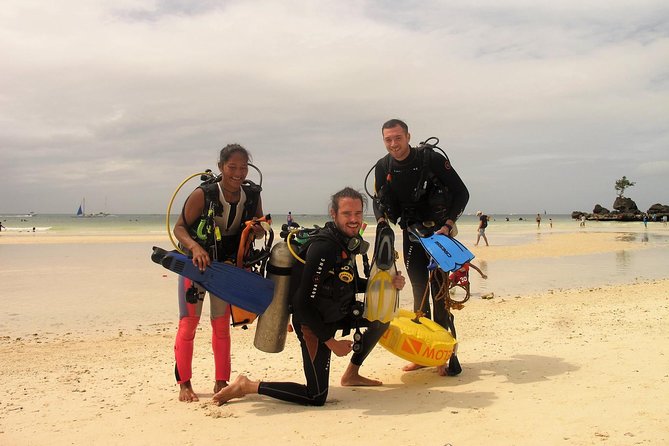
This is where you can prevent most headaches. The course has clear requirements you should handle early.
Medical form and health questionnaire
You’re required to:
- complete and sign the PADI medical form, and bring it
- complete a health questionnaire prior to diving
The course instructions specifically point you to PADI’s medical form PDF and also tell you to check whether you need special medical clearance. Bring the completed paperwork with you.
If you hate paperwork, start earlier than you think. Waiting until the day you arrive is a fast route to stress.
Height and weight needed at booking
You must advise your height and weight at time of booking. That helps with gear sizing and fit. If you forget or provide wrong details, expect delays or last-minute adjustments.
Flight timing
The course notes that diving within 24 hours of flying is not recommended. If you’re connecting flights, give yourself a day buffer if you can.
What to bring
From the course info, towels are not included, so pack a towel if you need one. Food and drinks are also not included, so plan meal breaks around the scheduled lunch breaks.
Also, the meeting point is near public transportation and the center allows service animals, so logistics should feel manageable.
Who this 4-day open-water certification is best for
You should consider this course if:
- you want PADI open-water certification through a structured 4-day plan
- you want instructor support during both confined skills and open-water application
- you prefer smaller group learning (max 15)
- you’re okay doing classroom theory, quizzes, and a final exam
It may not be the best fit if:
- you need zero scheduling flexibility, because the program depends on weather and includes catch-up time on Day 4
- you’re not prepared to complete the medical form and health questionnaire ahead of time
- you’re hoping meals and towels are covered automatically, since they are not listed as included
For first-timers, the repeated pattern of theory plus practice is the biggest strength. For returning students who need refreshers, instructors like Darwin are specifically praised for helping people get comfortable again.
Should you book WaterColors for PADI open-water certification in Boracay?
I’d book it if you want a straightforward, instructor-led path to certification, not just a one-off underwater experience. The biggest reasons are practical: included instructor time, included materials and processing, equipment provided, boat transport included, and a small group size.
The only real reasons to hesitate are also practical: weather can shift schedules, and you must handle the medical paperwork and health questionnaire ahead of time. If you take care of that, you’ll likely spend your energy where it matters, on learning the skills and feeling comfortable underwater.
If you’re planning your Boracay trip around this course, keep Day 4 flexible in case you need catch-up for skills or theory. Then enjoy the payoff, when you earn that certification after a full training rhythm across the week.
FAQ
What does the course include?
You get a PADI scuba instructor, PADI course materials and certification processing, use of scuba equipment, and boat transport to and from the water spot. Food and drinks, souvenir photos, hotel transfers, and towels are not included unless specified.
How long is the Boracay course?
The course runs for 4 days (approx.), with a schedule that includes multiple theory sessions, confined-water skills practice, several open-water sessions, and a final exam on Day 4.
What are the main parts of the training?
It follows a sequence of classroom theory, confined-water training (starting shallow and then deeper water), and open-water sessions out on a boat with your PADI-qualified instructor.
How many open-water sessions will I do?
The course is designed so you complete 5 open-water sessions by the end of the program.
What is the minimum age to participate?
The minimum age is 10 years.
Do I need medical paperwork before I go?
Yes. You must accomplish and sign the required PADI Diver Medical Form and complete a health questionnaire prior to diving. You are also told to print and bring the required documents.
Is transportation from my hotel included?
Hotel transfers are not included.
Can I cancel for a full refund?
Yes, you can cancel up to 24 hours in advance for a full refund. If you cancel less than 24 hours before the start time, the amount paid will not be refunded. If the experience is canceled due to poor weather, you’ll be offered a different date or a full refund.
Freshly added in Panay Island
- 2 Days SSI Advanced Open Water Course in Boracay★ 5.0 · 3 reviews
- WaterColors – PADI Scuba Diver Certification in Boracay★ 5.0 · 12 reviews
- DiveGurus -Scuba Diving for Kids(Ages 6-11yrs)★ 5.0 · 5 reviews
- Mainland ZipLine Experience in Boracay★ 5.0 · 8 reviews
- Discover Scuba Diving in Boracay with U/W Photo and Video★ 5.0 · 14 reviews
- Boracay Island Hopping + Hot Kawa + Parasailing + Helmet Diving★ 3.0 · 10 reviews
- Boracay PADI Discover Scuba Diving★ 5.0 · 9 reviews
- Mandala Wellness Spa in Boracay★ 4.0 · 5 reviews
Freediving & Dive Courses, compared.
El Nido: Discover Scuba Diving with Manta Rays in Sibaltan
Read our review →
Beginner Freediving Course (with Bonus Session)
Read our review →
Panglao: Napaling Reef and Sardines Freediving Experience
Read our review →Browse the lists this tour appears in