
REVIEW · THE PHILIPPINES
Home Cooked Meal with a Filipino Grandma
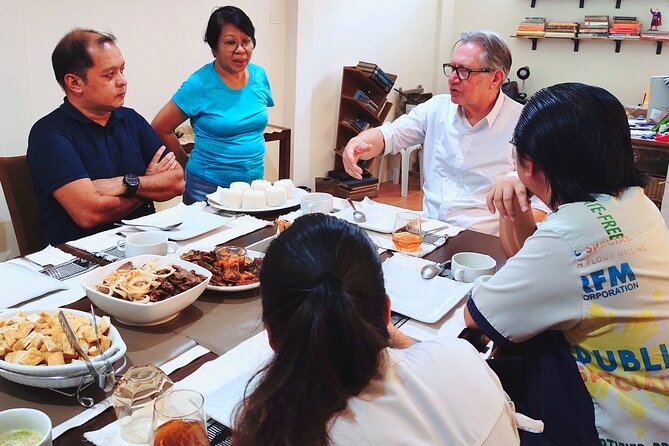
Eating at someone’s home changes everything. This small-group Manila lunch puts you at a Filipino family table for a home-style meal, with family-style service and kitchen stories that add real context. The host, Oyet, teaches through the act of cooking, talking, laughing, and sharing life history along the way. One watch-out, there are no vegan options.
I also like the fact that you’re going beyond the usual tourist loop. You’ll meet in Makati, then head into a local neighborhood you usually would not pick on your own, with hosts who keep the pace relaxed and welcoming. The experience runs about 2 hours 30 minutes, so it’s long enough to feel like a proper meal, not a rushed stop.
In This Review
- Key things you’ll notice
- Why this Filipino grandma meal feels different than a restaurant
- Price and what $60 gets you in Manila
- Meeting in Makati, then stepping into a local neighborhood
- The 2.5-hour flow: how the meal is likely to unfold
- What Oyet adds to the experience
- Family-style sharing: the real cultural lesson
- Coffee or tea, and the relaxed end to your lunch
- Who should book this, and who should skip it
- Before you go: tickets, timing, and weather
- Should you book this home-cooked Filipino lunch in Manila?
- FAQ
- What does the $60 per person price include?
- Is gratuity included?
- How long is the home-cooked meal?
- What time does the tour start?
- Where do I meet for the experience?
- Where does the tour end?
- What is the maximum group size?
- Are there vegan options?
- Is it near public transportation?
- What if I need to cancel or the weather is bad?
Key things you’ll notice
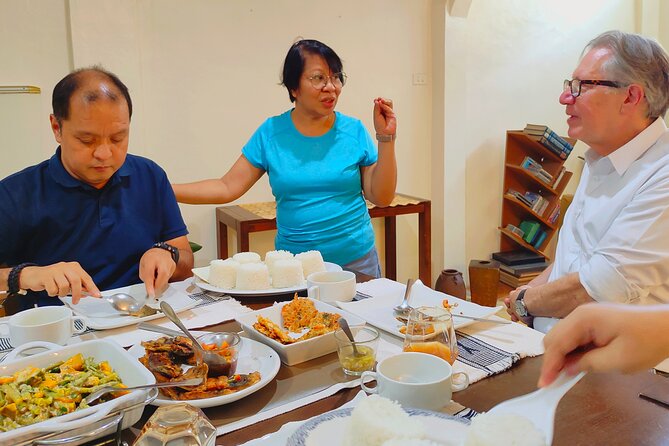
- A home-cooked, family-style meal served in courses, not a formal restaurant setup
- Oyet’s story-telling in the kitchen, turning cooking into a lesson about everyday culture
- Small group size (max 10), which helps conversations stay human-sized
- Makati meeting point with public transport nearby, easy to reach before you start eating
- Coffee or tea included with lunch, so you end with a proper pause
- No vegan options, so plan accordingly if your diet is plant-based
Why this Filipino grandma meal feels different than a restaurant
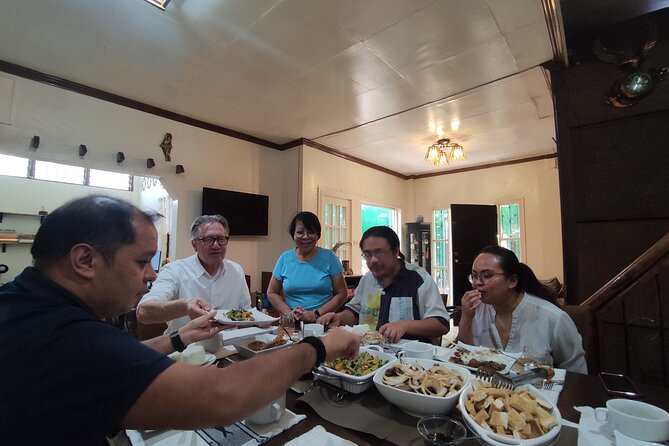
A restaurant can feed you. A home meal teaches you. Here, you’re not just ordering food and moving on. You’re invited into a real kitchen where the smells, the sounds, and the family rhythm matter.
The description is clear about what to expect: garlic sizzling in oil, family chatter, and the quiet dignity of someone cooking a dish perfected over decades. That might sound poetic, but in practice it means you’re likely to feel more like you’re visiting a family than joining a food show.
Another reason I’d pick this over a standard tasting menu is the social side. You sit down to share plates family-style, so the conversation and the food move together. If you enjoy learning by watching people work, this format makes it easy. You’re not staring at a worksheet. You’re eating, listening, and picking up small details as they come.
More of Luzon worth pencilling in:
- Manila Old and New: Sightseeing Tour Including Intramuros and Fort Santiago
★ 4.5 · 377 reviews - Manila’s Walled City: Intramuros Walking Tour
★ 5.0 · 82 reviews - Manila Filipino Cooking Class: Meryenda Favorites
★ 5.0 · 80 reviews
Price and what $60 gets you in Manila
This experience costs $60 per person, and it’s typically booked about 10 days in advance. For Manila, that price is not cheap, but the value is easier to justify when you look at what’s included and what’s limited.
You get lunch plus coffee and/or tea. You also get a true home setting and a small maximum group size of 10. That combination is usually what drives the cost up on food experiences in the Philippines, because it relies on a family opening their home, time, and kitchen work to a limited number of people.
Also, the tour includes features like group discounts and a mobile ticket. Group discounts are great if you’re traveling with friends or family and want to share the cost. The mobile ticket matters less for taste, but it makes logistics simpler on the day.
One more practical note: gratuity is not included. That doesn’t mean you must tip, but you should budget for it if your style is to reward the host who feeds you and teaches you.
Meeting in Makati, then stepping into a local neighborhood
You start at airobedz, BGC1051 General G. Del Pilar St, Makati, Makati City, 1214, Metro Manila. It begins at 11:00 am and ends back at the same meeting point.
The meeting spot is in Makati, and the experience is described as near public transportation. That’s useful if you want to plan your day without stress. You can arrive with a normal commute plan rather than needing a private ride.
What I find especially compelling is the promise that you’ll explore a colorful neighborhood tourists rarely get to explore. Even without a formal sightseeing itinerary, that matters. Food is local. If you only eat in the tourist zone, you miss the everyday context that shapes what people cook and how they eat.
The 2.5-hour flow: how the meal is likely to unfold
The duration is about 2 hours 30 minutes. That’s a good length for a home meal because it gives time for more than just eating. You can settle in, hear the story behind what’s being served, and keep the conversation going without anyone rushing you out.
Here’s how the experience is set up for you:
- You’ll be welcomed by the hosts into a home setting.
- Lunch is served family-style, so you’re sharing dishes at the table.
- You’ll have coffee and/or tea included with the meal.
- The experience is positioned as multi-course, with authentic Filipino dishes and stories tied to different parts of the Philippines.
Even though no specific dish list is provided, the structure matters. Multi-course family-style meals usually mean you don’t get one plate and leave. You get a rhythm: a first dish, then another, with the host explaining what you’re eating and why it belongs in Filipino food culture.
That pacing is part of the value. If you’re the type who likes to understand food, not just taste it, a story between courses is often the moment where everything clicks.
A different kind of day in the islands:
- Batad Guided Tour
★ 5.0 · 78 reviews - Manila Super Saver: Manila Sightseeing plus Tagaytay Tour with Taal Volcano
★ 4.0 · 75 reviews - Express Bamboo Bike Tour inside Intramuros
★ 4.5 · 66 reviews - PanoramicTagaytay Ridge Tour from Manila
★ 4.0 · 52 reviews
What Oyet adds to the experience
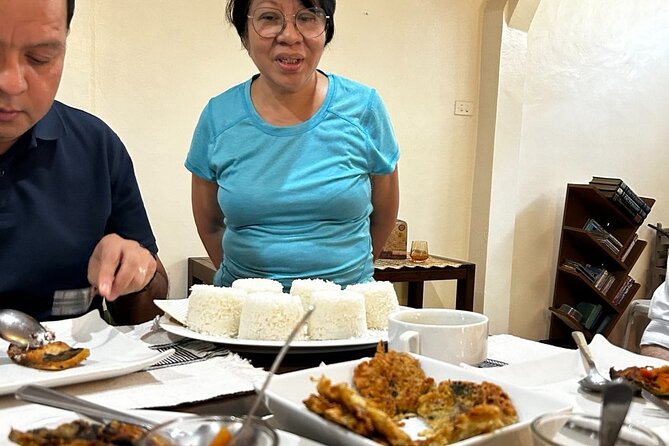
The reviews you provided highlight one name in particular: Oyet. In that kind of home meal, the host becomes the guide. Oyet isn’t just feeding you. She’s teaching through cooking and conversation.
The review summary you shared describes a morning of cooking, talking, laughing, and sharing life and history. That matters because Filipino food hospitality often includes storytelling and warmth, not just instruction. When the host shares what cooking means to their family, you start connecting flavors to memories and everyday life.
So, what should you do to get the most out of Oyet’s teaching? Stay curious and ask simple questions in the moment. When something is served, ask what it’s like growing up eating it, or what makes that dish special in their region. You’ll get more out of those conversations than trying to memorize details.
Also, because the group is small, you’re not stuck watching from the side. You can actually hear the explanations, react, and ask follow-ups while the meal keeps moving.
Family-style sharing: the real cultural lesson
Family-style service can sound like a dining preference. In a cultural tour context, it becomes a window into how people eat together.
Instead of individual plated portions, you’re likely to receive dishes meant for sharing around the table. That changes the meal dynamic. You pass food. You try bites from someone else’s plate. You notice what people naturally reach for first.
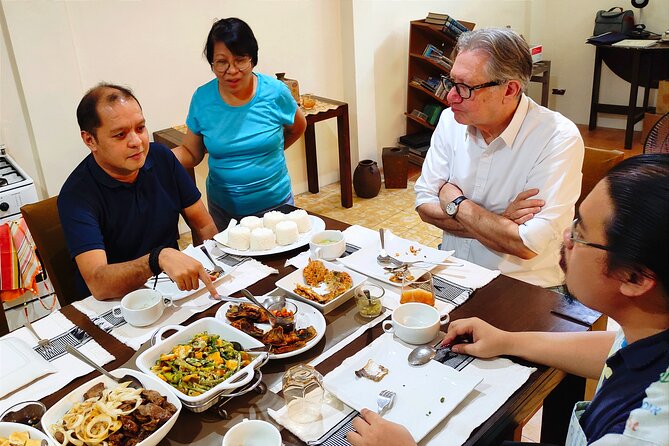
It also tends to lower barriers. Strangers at a restaurant usually keep to their own routine. At a shared family table, you’re pulled into the same rhythm. That’s when you learn more than flavor notes. You learn how people talk while eating, what gets passed around, and how the meal becomes a social event.
If you like food experiences where you can connect with people, family-style is one of the best formats for that.
Coffee or tea, and the relaxed end to your lunch
Coffee and/or tea are included. That sounds small, but in a home meal it helps finish the experience like a real lunch, not a food stop.
This is especially true because the schedule is about 2 hours 30 minutes total. A warm drink at the end gives you space to keep chatting after the last course. It also helps you slow down. In many big-city food tours, you’re always on the move. Here, you’re anchored at the table.
Who should book this, and who should skip it
This experience is described as suitable for most travelers. It’s also a good fit for solo travelers, couples, friends, or families, mainly because the atmosphere is social but not chaotic, and the group size is limited.
Book it if:
- You want a home-cooked meal rather than a restaurant dining experience
- You enjoy stories and context that come during the meal
- You like small groups and conversation
- You’re in Manila around late morning and want a meaningful lunch plan
Be cautious if:
- You need vegan options. The experience clearly states there are no vegan options.
- You have food allergies. You can reach out about restrictions, but vegan needs and allergy requirements may not always match what a home kitchen can adapt, so don’t assume. Contact the operator before booking so you know what’s possible.
Also consider your comfort level with a family setting. This is not a silent museum-style experience. You’ll be part of the household energy.
Before you go: tickets, timing, and weather
Start time is 11:00 am, and you’ll end back where you started in Makati. Confirmation is received at time of booking, and the tour uses a mobile ticket.
One practical point: the experience requires good weather. If it’s canceled due to poor weather, you’ll be offered a different date or a full refund. That makes it a smarter choice when you’re staying flexible in your Manila schedule.
If you have any allergies or dietary restrictions beyond vegan needs, reach out ahead of time. The operator notes that you can contact them for food allergies or restrictions.
Should you book this home-cooked Filipino lunch in Manila?
I’d book it if your ideal food travel day includes people, not just plates. This is one of those experiences where the value comes from the setting, the conversation, and the way a host like Oyet turns cooking into storytelling. With a max group size of 10, it’s more likely you’ll feel included rather than processed.
If your food needs are strict, or if you’re vegan, then I’d rethink it. The no vegan options note is the biggest decision factor you should not ignore.
If you’re traveling through Manila and want one lunch that feels like you joined a family table, this is a strong choice, especially if you can book in advance and keep your day weather-friendly.
FAQ
What does the $60 per person price include?
The experience includes lunch and coffee and/or tea.
Is gratuity included?
No, gratuity is not included.
How long is the home-cooked meal?
It lasts about 2 hours 30 minutes.
What time does the tour start?
It starts at 11:00 am.
Where do I meet for the experience?
Meet at airobedz, BGC1051 General G. Del Pilar St, Makati, Makati City, 1214, Metro Manila, Philippines.
Where does the tour end?
The activity ends back at the meeting point.
What is the maximum group size?
The tour has a maximum of 10 travelers.
Are there vegan options?
No, there are no vegan options.
Is it near public transportation?
Yes, it is near public transportation.
What if I need to cancel or the weather is bad?
You can cancel for a full refund up to 24 hours before the experience’s start time. The experience requires good weather, and if it’s canceled due to poor weather, you will be offered a different date or a full refund.
Freshly added in Luzon
- Skip the Line: Villa Escudero Plantation & Resort Day Pass Ticket★ 4.5 · 11 reviews
- Intramuros Walking Tour: Explore the Manila’s Walled City|Private★ 5.0 · 9 reviews
- Villa Escudero Tour with Lunch From Manila (SHARED)★ 5.0 · 5 reviews
- Villa Escudero Coconut Plantation Day Trip from Manila★ 3.5 · 9 reviews
- The Jeepney & Tuk Tuk Adventure ride with Local Guide★ 4.5 · 4 reviews
- Private Filipino Cooking Class in the Heart of Manila,Makati City★ 5.0 · 5 reviews
- Angeles City / Clark Airport to La Union (Bauang, San Fernando, San Juan)★ 3.5 · 4 reviews
- Manila ATV Mountain Trail Adventure(with Transfers***)★ 4.5 · 19 reviews